--> -->
Renee Penna - Broker/Owner - Renee & Associates
  • Home
  • Our Listings
    • Active Listings
    • Sold Listings
  • Search
    • Quick Search
    • Advanced Search
    • Foreclosures
  • Communities
    • Search By Area
    • Easton Homes
    • Monroe Homes
    • Naugatuck Homes
    • Seymour Homes
    • Milford Homes
    • Stratford Homes
    • Derby Homes
    • West Haven Homes
    • East Haven Homes
    • North Haven Homes
    • Ansonia Homes
    • Bridgeport Homes
    • Trumbull Homes
    • Fairfield Homes
    • New Haven County Homes
    • Fairfield County Homes
  • Resources
    • Buyer Services
    • Seller Services
    • Tips For Buyers
    • Tips For Sellers
    • Homeowner Information
    • Title & Escrow Information
    • Mortgage Information
    • Relocation
    • Weather
    • Real Estate Glossary
    • Dream Home Finder
    • Free Market Analysis
  • About
    • About Us
    • Our Agents
    • Join Our Team
    • Testimonials
  • Blog
  • Contact Us
Select Page

The Biggest Perks of Buying a Home This Winter

by Renee Penna | Dec 18, 2024 | Buying Tips, First-Time Buyers, For Buyers

When it comes to buying a home, most people automatically think of the spring or summer months as the prime time to make a move. However, winter offers a unique set of advantages that many buyers overlook. From lower prices to fewer competing buyers, purchasing a home during the winter season can be a smart move. Here’s why winter might be the best time to buy your next home.

1. Less Competition

One of the biggest advantages of buying a home in the winter is the reduced level of competition. During the colder months, fewer buyers are actively searching for properties, which means you won’t have to deal with bidding wars or multiple offers on homes you’re interested in. The result? Less stress and a better chance of securing the property you want.

With fewer buyers in the market, you also have more time to make decisions. You won’t feel rushed to put in an offer just because someone else might beat you to it. As a result, you can approach your home search with a clearer, more thoughtful mindset.

2. Lower Prices

While winter isn’t typically seen as a “discount season” for real estate, homes are often priced lower during the colder months. Sellers who have their homes listed in winter may be motivated to sell quickly, especially if their property has been on the market for a while. This gives buyers an opportunity to negotiate better prices or potentially snag a home at a lower cost than they would have paid during the busy spring or summer seasons.

Moreover, fewer buyers in the market can create a softening effect on prices, providing you with more room to negotiate. This can be especially beneficial if you’re on a budget or if you’ve had trouble finding an affordable home in a competitive market.

3. More Serious Sellers

In winter, most sellers who keep their homes listed are serious about selling. Whether they’re relocating for work, facing personal circumstances, or trying to close before the end of the year for tax purposes, winter sellers are often highly motivated. This can give buyers an advantage when it comes to negotiations, as sellers may be more willing to compromise on price, closing costs, or other terms to move forward with the sale.

Additionally, serious sellers are often more willing to work with you on the timeline, which can lead to a quicker and smoother transaction. If you need to close quickly, winter might be the ideal time to purchase.

4. A Better View of the Home’s Condition

Winter offers a unique opportunity to see a property in its true form. With colder temperatures, rain, or snow, you’ll be able to evaluate how well the home holds up to the elements. You can assess the effectiveness of the home’s heating system, the quality of insulation, and potential issues like leaks or drafts.

For example, if you’re looking at a home with a fireplace, winter is the perfect time to see how it performs when in use. Likewise, you’ll get a firsthand look at how the home fares in snow or rainy conditions. This insight can help you avoid any surprises after the sale is complete.

5. Mortgage Rates May Be Lower

While mortgage rates fluctuate throughout the year, they sometimes dip during the winter months. If you’re in a position to take advantage of a rate drop, you could save a significant amount of money over the life of your loan. Keep an eye on mortgage trends, as lower rates can help offset some of the other costs associated with purchasing a home.

It’s also worth noting that lenders might be more willing to negotiate loan terms during the winter, given the slower business cycle. This could potentially result in a more favorable financing arrangement for you.

6. Quicker Closing Process

In the winter, the real estate market tends to slow down, which means fewer people are in the process of buying or selling homes. This can actually work to your advantage, as it often leads to a faster closing process. With fewer buyers and sellers, the paperwork tends to move more quickly, and you won’t have to wait as long for things like home inspections, appraisals, or even title work.

If you’re someone who wants to move into your new home quickly, winter is an ideal time to finalize the deal and complete the transaction.

7. Potential Tax Benefits

Buying a home in winter, particularly before the year’s end, can give you a head start on potential tax benefits. You may be able to deduct property taxes, mortgage interest, and other expenses from your taxes for that year. These deductions can help you save money during tax season and make your home purchase more affordable in the long run.

It’s important to consult with a tax advisor to understand how these potential benefits apply to your specific situation, but it’s certainly worth considering when making a purchase in the final months of the year.

8. Less Stressful Process

Buying a home is often considered a stressful experience, but the winter months can help ease some of that pressure. Since there are fewer buyers and sellers in the market, you’ll experience less frantic competition for properties. This means you can take your time and make informed decisions, rather than rushing to make an offer.

Additionally, with fewer open houses and showings to attend, you have more flexibility in your schedule to view homes at your convenience. This makes the overall process of finding and purchasing a home much more relaxed and manageable.

Conclusion

While spring and summer may be the typical seasons to buy a home, winter offers a unique set of benefits that can make the process easier, faster, and more affordable. From lower prices and less competition to motivated sellers and potential tax advantages, winter could be the perfect time to find your dream home. If you’re ready to make a move, don’t let the cold weather deter you—take advantage of the perks that come with buying a home in winter.

How Co-Buying a Home Helps with Affordability Today

by Renee Penna | Nov 27, 2024 | Buying Tips, For Buyers

As home prices continue to rise and mortgage rates remain high, many prospective buyers are facing increasing challenges when it comes to affording a home. For first-time buyers, the dream of homeownership can feel more distant than ever. However, one effective solution gaining traction is co-buying a home. Pooling resources with others—whether friends, family, or even strangers—can help buyers navigate today’s competitive real estate market. In this article, we’ll explore how co-buying can help make homeownership more affordable and accessible.

What is Co-Buying a Home?

Co-buying involves two or more individuals purchasing a property together, sharing the financial responsibilities of homeownership, including the down payment, mortgage payments, property taxes, insurance, and maintenance costs. This arrangement can be particularly beneficial for individuals who might not be able to afford a home on their own due to high home prices or income limitations.

How Co-Buying Helps with Affordability

1. Sharing the Financial Burden

One of the most significant advantages of co-buying is the ability to split the financial load. By pooling funds, the individuals involved can collectively handle expenses that might otherwise be out of reach for each person alone.

  • Down Payment Assistance: Saving for a down payment is often the largest hurdle to purchasing a home. When co-buyers work together, they can combine their savings to afford a larger down payment, reducing monthly mortgage payments and potentially lowering the interest rate.
  • Lower Monthly Payments: Mortgage payments, utilities, property taxes, and other associated costs can be overwhelming. Co-buying allows individuals to share these ongoing expenses, making homeownership more manageable.

2. Increasing Buying Power

Co-buying increases your financial leverage, allowing you to buy a more expensive home than you could individually. Pooling incomes can also make it easier to qualify for a larger mortgage or better loan terms.

  • Access to Bigger Properties: With combined funds, co-buyers can afford a higher-priced home, which is especially valuable in expensive housing markets. This can open up opportunities to purchase in better neighborhoods or secure larger homes that meet long-term needs.
  • Improved Loan Approval Odds: Lenders assess the creditworthiness and income of all parties involved in a co-buying agreement. With multiple incomes and credit histories to consider, co-buyers often have a stronger case for loan approval, which can also result in a lower interest rate or better loan conditions.

3. Shared Maintenance and Upkeep

Beyond the purchase price, homeownership involves many ongoing expenses—maintenance, utilities, and repairs can add up quickly. Co-buying means these costs can be divided among the owners, lessening the financial strain on any one individual.

  • Shared Responsibilities: When something breaks or needs upkeep, the financial burden and decision-making process are shared. This can make maintaining a home far more affordable and less stressful, especially for individuals who may not have the skills or time to tackle repairs on their own.

4. Faster Entry into the Market

The ability to afford a home sooner is one of the most appealing aspects of co-buying. For many would-be homeowners, high property prices and the challenge of saving for a down payment delay their ability to enter the market.

  • Early Homeownership: By combining resources, co-buyers can enter the market sooner, avoiding years of renting while waiting to save enough for a solo home purchase. This early entry can be beneficial, as it allows them to start building equity, securing long-term financial benefits, and locking in lower mortgage rates before they rise further.

5. Risk Mitigation and Flexibility

Co-buying spreads both the risks and rewards of homeownership across multiple people. While real estate can be a solid long-term investment, it also comes with its challenges, such as market fluctuations or unforeseen expenses.

  • Sharing Risks: Real estate investments carry risks, from market downturns to the potential of having to sell the property unexpectedly. In a co-buying arrangement, these risks are shared, meaning the financial strain is less concentrated on one person.
  • Exit Strategy: In the event that one co-buyer wishes to move out or sell, having multiple owners provides a clearer pathway to negotiate terms and make decisions together. A co-buying agreement should always include an exit strategy to outline what happens if someone needs or wants to sell their share of the property.

Considerations Before Co-Buying

While the benefits of co-buying are clear, it’s essential to approach this arrangement thoughtfully. Proper planning and communication are key to ensuring the relationship remains positive and the investment successful.

  1. Legal Agreements: It’s crucial to formalize the co-buying arrangement with a legal agreement that outlines each party’s responsibilities and shares in the property. This should include everything from financial contributions to decision-making authority and what happens if someone decides to sell.
  2. Clear Communication: Open, honest communication is essential. All parties involved must be aligned on goals, timelines, and responsibilities. This helps prevent misunderstandings and disputes in the future.
  3. Financial Compatibility: Co-buyers should ensure they are financially compatible. Discuss credit histories, financial obligations, and long-term goals to avoid surprises down the road. Financial stability and compatibility will help the arrangement run smoothly.
  4. Relationship Dynamics: Whether you’re buying with family, friends, or strangers, it’s important to assess the dynamics of the relationship. Trust and mutual respect are fundamental in ensuring the partnership is successful and that everyone is equally invested in the homeownership experience.

The Majority of Veterans Are Unaware of a Key VA Loan Benefit

by Renee Penna | Nov 12, 2024 | Buying Tips, For Buyers

As a veteran or active-duty service member, you may be missing out on one of the most valuable benefits available to you: the VA Loan. This government-backed mortgage offers unique advantages that make homeownership more accessible and affordable for veterans, yet many remain unaware of its full potential.

1. No Down Payment Required

The most significant benefit of a VA Loan is that you don’t need a down payment. While traditional mortgages often require 5% to 20% down, VA loans allow you to finance 100% of the home’s purchase price—making it easier to become a homeowner.

2. No Private Mortgage Insurance (PMI)

Unlike conventional loans, VA Loans don’t require PMI, even with no down payment. This saves you money each month and lowers the overall cost of the loan.

3. Lower Interest Rates

VA loans often come with lower interest rates compared to traditional mortgages, meaning you’ll pay less over the life of your loan.

4. No Prepayment Penalties

You can pay off your VA Loan early without any prepayment penalties—giving you more flexibility and the chance to save on interest.

5. Higher Loan Limits

While there are limits based on the county and home price, the VA doesn’t impose a hard cap on the loan amount. In higher-cost areas, you can often qualify for a larger loan than you might think.

6. Flexible Eligibility Requirements

VA loans are available to veterans, active-duty service members, National Guard members, and qualifying surviving spouses. Eligibility is often more flexible than traditional loans, making it easier for veterans to qualify.

7. Closing Costs Are Limited

The VA limits the amount you can be charged for closing costs, which helps make the homebuying process more affordable.

8. Affordable Funding Fee

While there is a one-time funding fee, it’s typically much lower than private mortgage insurance (PMI), and it can be rolled into the loan.

9. Streamline Refinance Option

If you already have a VA loan, you can take advantage of a Streamline Refinance (IRRRL) to lower your rates with less paperwork and fewer fees.

10. No Minimum Credit Score Requirement

The VA doesn’t set a minimum credit score for eligibility, giving veterans with less-than-perfect credit a better shot at homeownership.

Final Thoughts

The VA Loan is one of the most powerful tools available to veterans, but many don’t fully understand its benefits. If you’re eligible, take advantage of these incredible perks—no down payment, no PMI, lower rates, and more—to make homeownership a reality.

Talk to a VA-approved lender today and start your journey toward owning a home. It’s a benefit you’ve earned, and it’s time to put it to use!

Why Did More People Decide To Sell Their Homes Recently?

by Renee Penna | Oct 17, 2024 | Buying Tips, For Buyers, Mortgage Rates

Homeowners typically slow down their moving plans as the summer months wrap up, and as a result, fewer homes are listed for sale in the fall. It’s a predictable, seasonal trend in real estate. But this year, mortgage rates came down at the same time the number of homes on the market usually starts to decline. So, what happened? More homeowners decided to sell, so more homes came to the market.

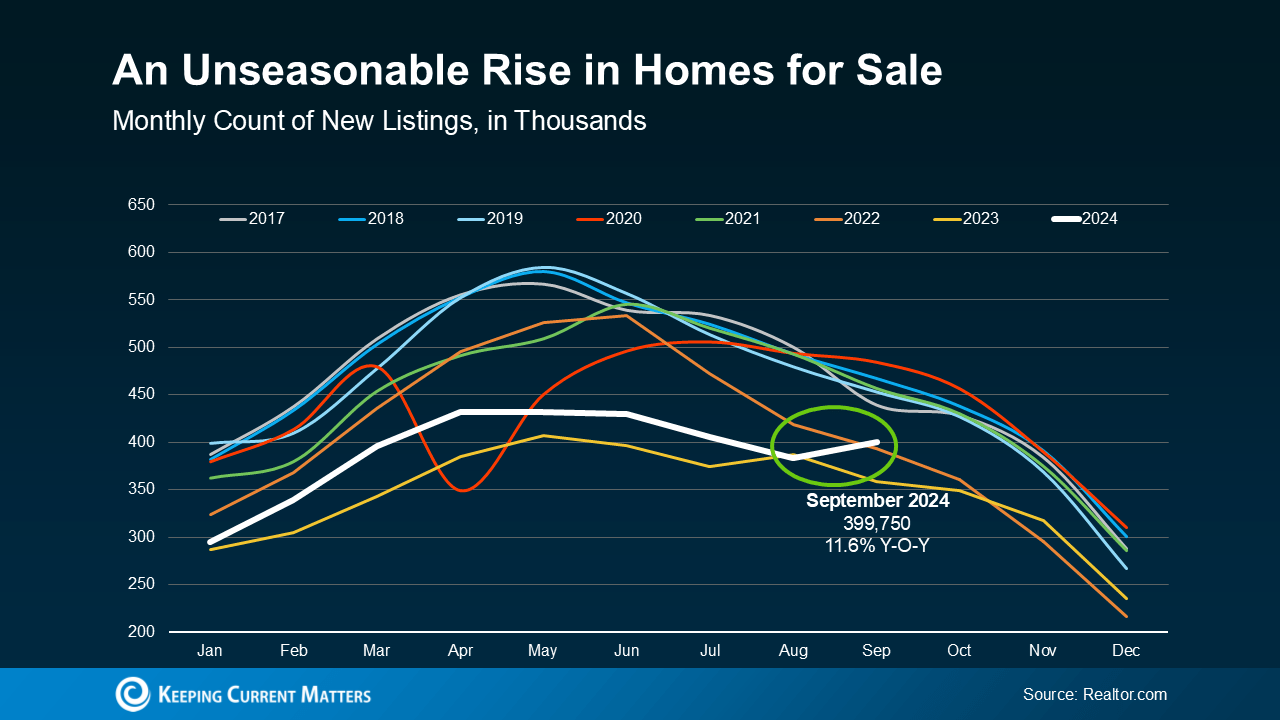
The most recent data from Realtor.com reveals that in September, the number of homes put up for sale increased by 11.6% compared to this time last year.

As the green circle in the graph below shows, the typical September decline in homes coming to the market didn’t happen – that number actually went up (see graph below):

a graph of a number of homesRalph McLaughlin, Senior Economist at Realtor.com, explains why there was an unseasonable rise:

“This sharp increase is largely due to the decline in mortgage rates in mid-August, enticing homeowners to sell.”

So, as rates came down at the end of the summer, more people jumped into the market and decided to make their move.

What Does This Mean If You’re Looking To Buy a Home?

It means more fresh options to choose from than you’ve had in a while – not the ones that have been sitting around, unsold.

But keep in mind, mortgage rates have been volatile lately, ticking up slightly in recent weeks, which could limit the number of people who feel comfortable with the idea of selling in the months ahead. And in this market, it’s mortgage rates that are largely driving homeowner decisions.

Why Buy Now, Rather Than Wait?

Whether you’re looking for a starter home, an upgrade, or hoping to downsize, you have more homes to choose from right now. And if you can find what you’re looking for, know that these new, fresh options won’t be on the market forever. So, staying on top of what’s available in your local area with a trusted agent is key.

And remember, one month doesn’t make a trend. So, what does that mean going forward? Whether more homeowners than normal continue to put their houses on the market will largely depend on what happens with mortgage rates and the economic factors that impact them, like inflation, employment, and the reactions by the Federal Reserve.

With that in mind, now might be your moment, while more homes are available – if you’re ready, willing, and able to buy this fall.

Lawrence Yun, Chief Economist at the National Association of Realtors (NAR), explains:

“The rise in inventory – and, more technically, the accompanying months’ supply – implies home buyers are in a much-improved position to find the right home and at more favorable prices.”

Bottom Line

As rates came down at the end of the summer, sellers started to trickle back into the market, which means buyers have more choices right now. And working with a trusted local real estate agent is the best way to take advantage of your new options before they’re all scooped up.

Don’t Fall for These Real Estate Agent Myths

by Renee Penna | Sep 26, 2024 | Agent Value, Buying Tips, For Buyers, For Sellers, Selling Tips

When it’s time to buy or sell a home, one of the most important decisions you’ll make is who you’ll work with as your agent. That choice will have an impact on your entire experience and how smoothly it goes.

As you figure out who you’ll partner with, it’s important to know what to expect and what to look for. Unfortunately, there may be some myths holding you back from making the best decision possible. So, let’s take some time to address those, and make sure you have the information you need to find the right agent for you.

Myth #1: All Real Estate Agents Are the Same

You might think all agents are the same – so it doesn’t matter who you work with. But, in reality, agents have varying levels of experience, specialties, and market knowledge, which can have a big impact on your results. For example: you’ll get much better service and advice from someone who is a true expert in their field. As Business Insider explains:

“If you were planning to get your hair done for a special event, you’d want to visit a stylist who specifically has experience doing that type of work — you wouldn’t make an appointment with someone who primarily does kids’ hair. The same concept applies to finding a real estate agent. If you have a smaller budget, you probably don’t want to work with an agent who exclusively sells multimillion-dollar properties.”

Take some time to talk with each agent you’re considering. Ask about their experience level and what they specialize in. This will help you find the one that’s the best fit for your search.

Myth #2: You Can Save Money by Not Using an Agent

As a seller, you may think you can save money by not working with a pro. However, the expertise, negotiation skills, and market knowledge an agent provides generally saves you money and helps you avoid making costly mistakes. Without that guidance, you could find yourself doing something like overpricing your house. And that’s a misstep that’ll cost you when it sits on the market for far too long. That’s why U.S. News Real Estate says:

“When it comes to buying or selling your home, hiring a professional to guide you through the process can save you money and headaches. It pays to have someone on your side who’s well-versed in the nuances of the market and can help ensure you get the best possible deal.”

Myth #3: Agents Will Push You To Spend More

You may also be worried an agent will push you to buy a more expensive house in order to increase their commission. But that’s not how that should go. A good agent will respect your budget and work hard to find a home that truly fits your financial situation and needs. With their market know-how, they’ll point you toward the best option for you, rather than try to pad their own pockets on your dime. As NerdWallet explains:

“Among other things, a good buyer’s agent will find homes for sale. A buyer’s agent will help you understand the type of home you can afford in the current market, find listed homes that match your needs and price range, and then help you narrow the options to the properties worth considering.”

Myth #4: Market Conditions Are the Same Everywhere, So Why Do I Need a Pro?

Maybe you believe housing market conditions are the same no matter where you are. But that couldn’t be further from the truth. Real estate markets are highly localized, and conditions can vary widely from one area to another. This is why you can’t pick just anyone you find online. You should choose an agent who’s an expert on your specific local market. As a recent article from Bankrate says:

“Real estate is very localized, and you want someone who’s extremely knowledgeable about the market in your specific area.”

You’ll know you’ve found the right person when they can explain the national trends and how your area stacks up too. That way you’re guaranteed to get the full picture when you ask: “how’s the market?”

Bottom Line

Don’t let myths keep you from the expert guidance you deserve. With market knowledge and top resources, a trusted local real estate agent isn’t just helpful, they’re invaluable.

In what could be one of the biggest financial decisions of your life, having the right pro by your side is a game changer. Connect with an agent to make sure you get the best outcome possible.

What To Know About Closing Costs

by Renee Penna | Sep 12, 2024 | Buying Tips, For Buyers

Now that you’ve decided to buy a home and are ready to make it happen, it’s a good idea to plan ahead for the costs that are a typical part of the homebuying process. And while your down payment is probably the number one expense on your mind, don’t forget about closing costs. Here’s what you need to know.

What Are Closing Costs?

Simply put, your closing costs are the additional fees and payments you have to make at closing. And while they’ll vary based on the price of the home and how it’s being financed, every buyer has these, so they shouldn’t be a surprise. It’s just that some people forget to budget for them. According to Freddie Mac, this part of the homebuying process typically includes:

  • Application fees
  • Credit report fees
  • Loan origination fees
  • Appraisal fees
  • Home inspection fees
  • Title insurance
  • Homeowners insurance
  • Survey fees
  • Attorney fees

Some of these are one-time expenses that are baked into your closing costs. Others, like homeowners’ insurance, are initial installment payments for ongoing responsibilities you’ll have once you take possession of the home.

How Much Are Closing Costs?

The same Freddie Mac article goes on to say:

“Closing costs vary greatly depending on your location and the price of your home. Typically, you should be prepared to pay between 2% and 5% of the home purchase price in closing fees.”

With that in mind, here’s how you can get an idea of what you’ll need to budget. Let’s say you find a home you want to purchase at today’s median price of $422,600. Based on the 2-5% Freddie Mac estimate, your closing fees could be between roughly $8,452 and $21,130.

But keep in mind, if you’re in the market for a home above or below this price range, your numbers will be higher or lower.

Tips To Reduce Your Closing Costs

If you’re wondering if there’s any way to inch that down a little bit, NerdWallet lists a few things that could help:

  • Negotiate with the Seller: Some sellers are willing to cover part or all of these expenses — especially since homes are staying on the market a bit longer now. Sellers may be more motivated to compromise, and you’ll find you have a bit more negotiation power. So don’t hesitate to ask them for concessions like paying for the home inspection or giving you a credit toward closing costs.
  • Shop Around for Home Insurance: Since rising home insurance is a challenge in many areas of the country right now, take the time to get a clear picture of all your options. Each insurance company offers their own policies and coverage, so get multiple quotes and see how they compare. Choosing a policy that provides reliable coverage at a competitive rate can make a difference.
  • Look into Closing Cost Assistance: Just like there are programs out there to help with your down payment, options exist to get support with closing costs too. While they’ll vary by area, there are programs for various income levels, certain professions, and specific towns or neighborhoods too. If you want to learn more, Experian says:

“Your real estate professional should be able to steer you toward applicable programs, and the U.S. Department of Housing and Urban Development (HUD) maintains a helpful resource for finding homebuying assistance programs in every state.”

Bottom Line

Planning for the fees and payments you’ll need to cover when you’re closing on your home is important – and it doesn’t have to be a big surprise. For more tips and expert advice, partner with a team of trusted real estate professionals, including a trusted agent and lender.

« Older Entries
 www.reneeandassociates.net

reneeandassociates1@gmail.com

  • Follow
  • Follow
  • Follow
  • Follow
  • Follow

 394 New Haven Ave. Suite #5,
Milford CT 06460

  203-283-5764

  203-395-0423

© Powered by ZipperAgent   |   Agent Login   |   Privacy Policy   |   DMCA

  • My Favorites (0)
  • My Saved Searches (0)
  • LOGIN

Get The Jump On
Real Estate Deals

Sign up today and receive email alerts of new listings
the moment they hit the market.

Please enter a valid first name
Please enter a valid last name
Please enter a valid email address
Please enter a valid phone number
Already have an account? Please Sign In

Get The Jump On
Real Estate Deals

Sign up today and receive email alerts of new listings
the moment they hit the market.

Please enter a valid email
Not a member? Register Here

This site uses cookies and related technologies for site operation, analytics, and for a better understanding of how visitors use the site. If you do not want the site to target ads, you can decline, and in that case only cookies required for the website to work properly will be used.