--> -->
Renee Penna - Broker/Owner - Renee & Associates
  • Home
  • Our Listings
    • Active Listings
    • Sold Listings
  • Search
    • Quick Search
    • Advanced Search
    • Foreclosures
  • Communities
    • Search By Area
    • Easton Homes
    • Monroe Homes
    • Naugatuck Homes
    • Seymour Homes
    • Milford Homes
    • Stratford Homes
    • Derby Homes
    • West Haven Homes
    • East Haven Homes
    • North Haven Homes
    • Ansonia Homes
    • Bridgeport Homes
    • Trumbull Homes
    • Fairfield Homes
    • New Haven County Homes
    • Fairfield County Homes
  • Resources
    • Buyer Services
    • Seller Services
    • Tips For Buyers
    • Tips For Sellers
    • Homeowner Information
    • Title & Escrow Information
    • Mortgage Information
    • Relocation
    • Weather
    • Real Estate Glossary
    • Dream Home Finder
    • Free Market Analysis
  • About
    • About Us
    • Our Agents
    • Join Our Team
    • Testimonials
  • Blog
  • Contact Us
Select Page

Buying a Home May Help Shield You from Inflation

by Renee Penna | Mar 5, 2025 | Home Prices, Rent vs Buy

In today’s economy, everything seems to be getting more expensive. With inflation staying higher than expected for longer, the cost of goods, services, and housing continues to rise. If you’re wondering whether now is the right time to buy a home, you’re not alone. The good news is that owning a home can actually protect you from the rising costs caused by inflation.

How a Fixed-Rate Mortgage Protects You from Rising Costs

One of the main advantages of homeownership is the stability a fixed-rate mortgage provides. When you buy a home with this type of mortgage, your most significant monthly expense—your mortgage payment—remains predictable. While homeowner’s insurance or property taxes may fluctuate, your principal and interest payments stay the same, regardless of how inflation impacts the broader economy.

In contrast, renting doesn’t offer the same security. Rent prices often rise over time, usually outpacing inflation. According to data from the Bureau of Economic Analysis (BEA) and the Census Bureau, rent prices tend to increase faster than inflation, making it harder for renters to budget effectively.

Homeowners with a fixed-rate mortgage lock in their payments, providing greater financial stability, even when prices are on the rise.

Home Prices Typically Outpace Inflation

Another reason why homeownership can protect you from inflation is that home values usually increase over time, often faster than inflation itself. According to data from the BEA and Fannie Mae, real estate has historically appreciated at a higher rate than inflation, making it one of the best long-term investments, especially during economic uncertainty.

While inflation diminishes the value of cash savings, real estate typically holds or grows in value. This enables homeowners to build wealth over time. Renters, on the other hand, don’t benefit from this appreciation. As inflation drives up costs, landlords often raise rent, forcing tenants to pay more without building any equity.

As a homeowner, rising prices work in your favor. The value of your home increases, and you gain equity over time, giving you a chance to build wealth—even as the cost of living rises. Experts predict that home prices will continue to appreciate, meaning purchasing a home now isn’t just about finding a place to live—it’s an investment that can outperform inflation.

The Bottom Line: Stability Through Homeownership

Inflation makes everyday expenses unpredictable, but owning a home provides stability. Unlike renting, your monthly mortgage payment will remain relatively stable, helping you plan your finances and manage your budget more effectively. Plus, as the value of your home increases, you have the opportunity to build wealth over time.

Owning a home with a fixed-rate mortgage is one of the best ways to protect yourself from rising costs. If you’re seeking financial stability and a hedge against inflation, now could be the ideal time to buy a home. How could locking in your housing payment help you better plan for your future?

If Your House’s Price Is Not Compelling, It’s Not Selling

by Renee Penna | Jan 30, 2025 | For Sellers, Home Prices

There’s one big mistake you need to avoid when you sell your house this year: setting  your price too high. It might seem like overpricing gives you room to negotiate or could really boost your profit, but the reality is, it usually backfires.

In fact, Realtor.com  says almost 20% of sellers — that’s one in five — have to   reduce their price to get their house sold. And you don’t want to be one of them. Here’s why starting  too high can lead to trouble, and how to avoid it.

Overpricing Pushes Buyers Away

With mortgage rates and home prices where they are right now, buyers are already stretching their budgets to make a move. So, when they see a house that’s priced too high, they’re not thinking, “I can negotiate.” They’re more likely to think, “next” and skip over your house entirely. An article from the National Association of Realtors (NAR)  explains: 

“Some sellers are pricing their homes higher than ever just because they can, but this may drive away serious buyers . . .”

And if they skip over your listing, you’ll miss out on the chance to get them through the door. That’s the last thing you want because fewer showings mean fewer chances to receive an offer.

The Longer Your House Sits, the More Skeptical Buyers Will Get

Here’s the other issue. An overpriced house tends to sit on the market longer. And the longer a house lingers, the more buyers start to wonder what’s wrong with it. Is there a problem with the house itself? Are you difficult to work with? Even if the only issue is the price, that extra time creates doubt. As U.S. News says:

“. . . setting an unrealistically high price with the idea that you can come down later doesn’t work in real estate . . . A home that’s overpriced in the beginning tends to stay on the market longer, even after the price is cut, because buyers think there must be something wrong with it.”

At that point, you’ll have no choice but to lower your price to drum up interest. But that price reduction comes with its own downside: buyers may see it as another red flag that there’s an issue with the house.

The Key To Finding the Right Price for Your House

So, what’s the secret to avoiding all these headaches? It’s simple. Work with a local real estate agent who knows the market inside and out, and who’s going to be honest with you about how you should price your house.

You don’t want to partner with someone who just agrees to whatever number you throw out there. That’s not an expert who’s going to get you the best results.

You want an agent who recommends a price based on their expertise. The right agent will use real-time data from your local market to help you land on a price that makes sense — one that grabs attention, attracts buyers, and still helps you walk away with a great return. Someone who has been there and done that – and done it well. That’s the agent you want to work with.

Bottom Line

Remember, if the price isn’t compelling, it’s not selling. Instead of shooting too high and scaring off buyers, work with a local agent who knows how to price it right.

Connect with an agent to make sure your house hits the market with the right price, gets noticed, and gets sold.

One Homebuying Step You Don’t Want To Skip: Pre-Approval

by Renee Penna | Jan 23, 2025 | For Buyers, Home Prices

When you’re in the market for a new home, you might be familiar with many parts of the process—touring homes, making offers, and negotiating prices. But there’s one crucial step that many first-time buyers overlook or don’t fully understand: pre-approval. Here’s a closer look at what pre-approval is, why it matters, and how it can help you navigate today’s competitive real estate market.

What Is Pre-Approval?

Pre-approval is a key part of the homebuying process. It’s a statement from a lender that tells you how much money they’re willing to lend you for a home purchase. To determine this, the lender will review your financial history, including income, credit score, debts, and assets. In order to get pre-approved, you’ll likely be asked to provide several important documents, such as:

  • W-2 forms from the last two years
  • Tax returns from the last two years
  • Pay stubs from the last 30 days
  • Bank statements from the last 60 days
  • Investment account statements (if applicable)
  • A two-year history of your addresses

Once your lender reviews this information, you’ll receive a pre-approval letter that outlines how much you are eligible to borrow. However, it’s important to note that your pre-approval status can change if your financial situation shifts. For example, changing jobs, taking on new credit debt, or withdrawing significant amounts of money from your savings could impact your pre-approval.

How Pre-Approval Helps You Determine Your Borrowing Power

In 2025, with home prices still expected to rise in many areas and mortgage rates fluctuating, understanding your borrowing power is more important than ever. Pre-approval gives you a clear sense of what you can afford and allows you to set a realistic budget for your home search.

By knowing your maximum loan amount, you can tailor your search to homes that fit within your budget and avoid falling for properties that would strain your finances. Pre-approval also provides a valuable opportunity to discuss mortgage rates with your lender, helping you plan for how rates might affect your monthly payments in the future.

How Pre-Approval Helps You Stand Out

Once you’ve found the home of your dreams and are ready to make an offer, pre-approval can be the game changer. It strengthens your offer and shows sellers that you’re a serious buyer who has already been vetted by a lender. Sellers are more likely to take your offer seriously because they know you’ve passed a thorough financial review, including a look at your pay stubs, tax returns, and bank statements.

Greg McBride, Chief Financial Analyst at Bankrate, explains the importance of pre-approval:

“Pre Approval carries more weight because it means lenders have actually done more than a cursory review of your credit and your finances, but have instead reviewed your pay stubs, tax returns and bank statements. A preapproval means you’ve cleared the hurdles necessary to be approved for a mortgage up to a certain dollar amount.”

This can give you an edge in a competitive market, where multiple offers are common and sellers often prioritize buyers who appear financially prepared.

Bottom Line

If you’re planning to buy a home, getting pre-approved for a mortgage should be one of the first steps on your to-do list. Not only does pre-approval provide clarity on how much you can borrow, but it also positions you to make a stronger offer when you find the perfect home. So, before you start touring homes, connect with a trusted lender and get pre-approved—you’ll be better prepared to navigate the homebuying process with confidence.

How Much Home Equity Have You Gained? The Answer Might Surprise You

by Renee Penna | Jan 15, 2025 | Equity, Home Prices

Have you ever stopped to think about how much wealth you’ve built up just from being a homeowner? As home values rise, so does your net worth. If you’ve owned your house for a few years (or longer), there’s a good chance you’re sitting on a pile of equity — and it might be more than you realize.

What Is Home Equity?

Home equity is the difference between what your house is worth and what you still owe on your mortgage. It represents the wealth you’ve built through homeownership. For example, if your home is worth $500,000 and you owe $200,000 on your mortgage, you have $300,000 in equity.

At a national level, homeowners are experiencing unprecedented growth in home equity. According to Intercontinental Exchange (ICE), the average homeowner with a mortgage now has $319,000 in home equity — a number that has been climbing rapidly in recent years.

Why Have Homeowners Gained So Much Equity?

Two main factors contribute to the massive increase in home equity over the years:

1. Significant Home Price Growth

One of the biggest drivers of growing equity is the dramatic rise in home prices. Over the past five years, home prices nationwide have risen by 57.4%, according to the Federal Housing Finance Agency (FHFA). This sharp appreciation means that your house is likely worth much more now than when you first bought it.

As home prices increase, so does your equity, often without you having to do anything. You simply benefit from the market’s appreciation.

2. Longer Tenure in Homes

Another factor contributing to equity growth is that homeowners are staying in their homes for longer periods. Data from the National Association of Realtors (NAR) reveals that the average person now stays in their home for about a decade. The longer someone stays in their home, the more time that home has had to increase in value, which directly boosts their equity.

If you’ve been in your home for 10 years or more, you might be sitting on even more wealth. According to NAR, “Over the past decade, the typical homeowner has accumulated $201,600 in wealth solely from price appreciation.” This growth in equity can significantly impact your financial position, especially as you plan for the future.

The Benefits of Home Equity

So, what does this mean for you? Your home’s equity could be a game changer, offering multiple benefits and opportunities for your financial future.

1. Moving to Your Next Home

Your equity could provide the down payment for your next home, making the transition much smoother. In some cases, it might even mean you can buy your next home outright, without needing a mortgage. This can eliminate monthly payments and significantly reduce the financial burden of buying a new property.

2. Financing Home Improvements

If you’ve been thinking about upgrading your kitchen, adding a home office, or making any other improvements, your home equity could be the perfect funding source. By using your equity to finance these projects, you not only make your home more enjoyable but may also increase its market value, further boosting your equity.

3. Getting a Business Going

Dreaming of starting your own business? Your home equity could be the kickstart you need. Whether you need capital for startup costs, equipment, or marketing, leveraging the value of your home can help you bring your entrepreneurial vision to life. By tapping into your equity, you can fund your business endeavors while still retaining ownership of your property.

Bottom Line: Home Equity as a Powerful Resource

Your home equity is more than just a number — it’s a powerful resource that can open up a range of opportunities. Whether you’re thinking about selling, upgrading to a new home, or simply want to use your equity to meet personal or business goals, it’s important to understand its potential.

If you’re wondering how much equity you’ve built or how you can best use it, consider reaching out to a local real estate agent. They can help you explore your options and make the most of the wealth you’ve built through homeownership.

Home Values Rise Even as Median Prices Fall

by Renee Penna | Oct 3, 2024 | For Buyers, For Sellers, Home Prices

Recent headlines have been buzzing about the median asking price of homes dropping compared to last year, and that’s sparked plenty of confusion. And as a buyer or seller, it’s easy to assume that means prices are coming down. But here’s the catch: those numbers don’t tell the full story.

Nationally, home values are actually rising, even if the median price is down a bit. Let’s break down what’s really happening so you can make sense of the market without getting caught up in the fear the headlines create.

Homes on the Market Right Now Are Smaller

The biggest reason for the dip in median price is the size of homes being sold. The median price reflects the middle point of all the homes for sale at any given time. And that’ll be affected by the mix of homes on the market.

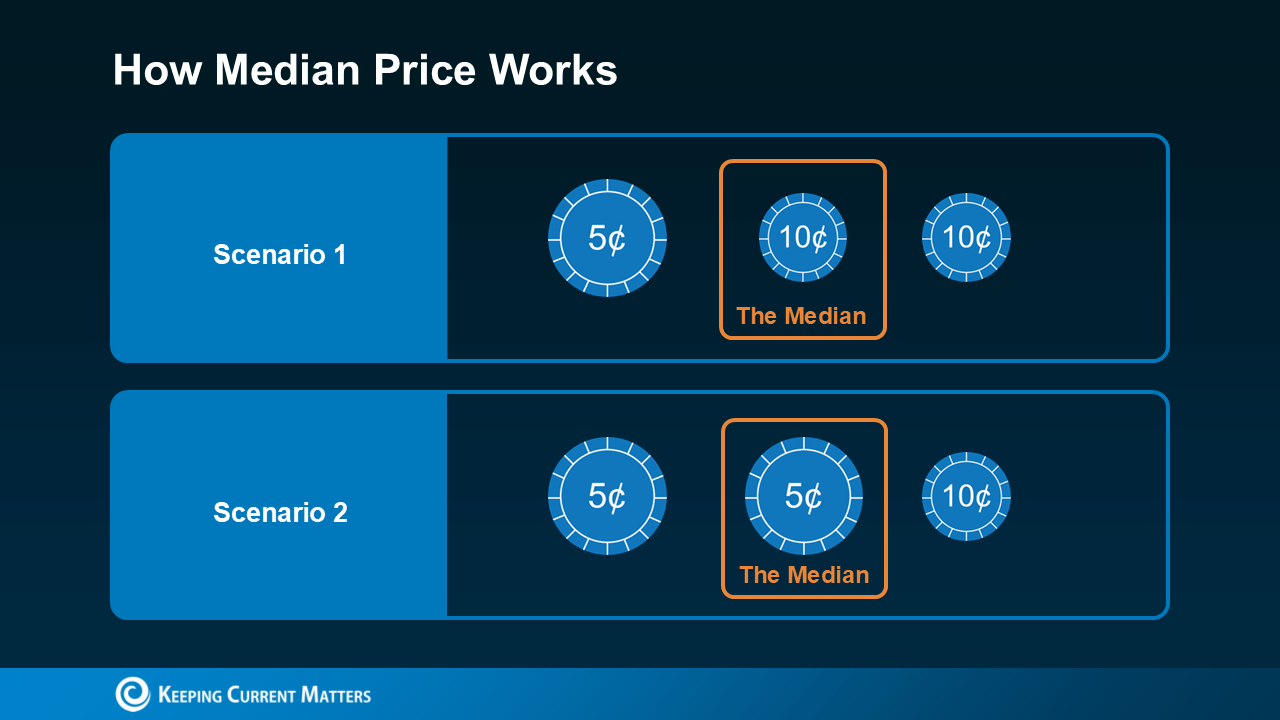
To show you how this works, here’s a simple explanation of a median (see visual below). Let’s say you have three coins in your pocket, and you decide to line them up according to their value from low to high. If you have one nickel and two dimes, the median (the middle one) is 10 cents. If you have two nickels and one dime, the median is now five cents.

No Caption ReceivedIn both cases, a nickel is still worth five cents and a dime is still worth 10 cents. The value of each coin didn’t change. The same is true for housing.

Right now, there’s a greater number of smaller, less expensive homes on the market, and that’s bringing the overall median price down. But that doesn’t mean home values are declining.

As Danielle Hale, Chief Economist at Realtor.com, explains:

“The share of inventory of smaller and more affordable homes has grown, which helps hold down the median price even as per-square-foot prices grow further.”

And here’s the data to prove it.

Price Per Square Foot Is Still Rising

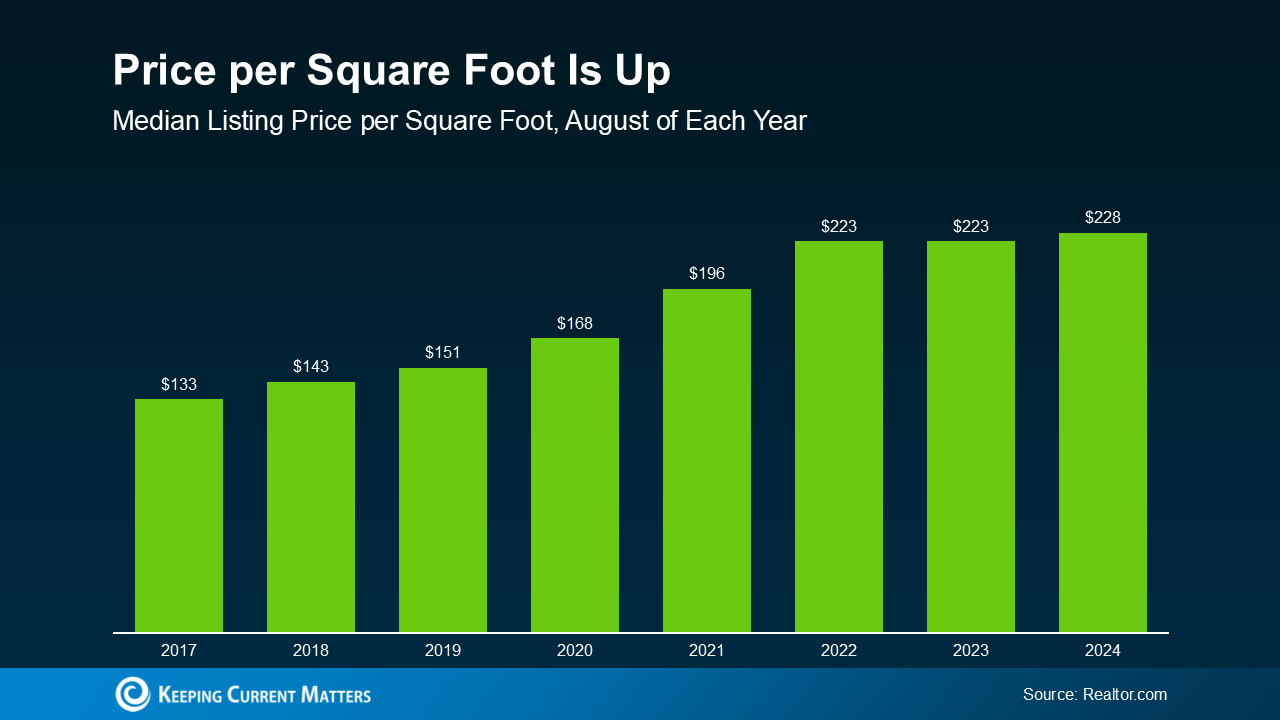
One of the best ways to measure home values is by looking at the price per square foot. That’s because it shows how much you’re paying for the space inside the home.

The median asking price doesn’t take into account the size of different homes, so it may not always reflect the true value. And the latest national price per square foot data shows home values are still increasing, even though the median asking price has dropped (see graph below).

No Caption ReceivedAs Ralph McLaughlin, Senior Economist at Realtor.com, explains:

“When a change in the mix of inventory toward smaller homes is accounted for, the typical home listed this year has increased in asking price compared with last year.”

This means that while smaller homes are affecting the median price, the average home’s value is still rising. According to the Federal Housing Finance Agency (FHFA):

“Nationally, the U.S. housing market has experienced positive annual appreciation each quarter since the start of 2012.”

So, while headlines may make it sound like prices are crashing, you don’t have to worry. With a closer look and more reliable data, you can see that prices are still climbing nationally.

But it’s important to remember that home prices can vary by region. While national trends provide a big-picture view, local markets may be experiencing different conditions. A trusted agent is the best resource to explain what’s happening in your area.

Bottom Line

The decrease in median price is not the same as a decrease in home values. The median asking price is down mostly due to the mix of smaller, less expensive homes on the market.

The important thing to focus on is the price per square foot, which is a better indicator of overall market value—and those prices are still going up. If you have questions about what home prices are doing in your area, reach out to a local real estate agent who can provide insights on your specific market.

The Real Story Behind What’s Happening with Home Prices

by Renee Penna | Sep 11, 2024 | For Buyers, For Sellers, Home Prices

If you’re wondering what’s going on with home prices lately, you’re definitely not the only one. With so much information out there, it can be hard to figure out your next move.

As a buyer, you might be worried about paying more than you should. And if you’re thinking of selling, you might be concerned about not getting the price you’re aiming for.

So, here’s a quick breakdown to help clear things up and show you what’s really happening with prices—whether you’re thinking about buying or selling.

Home Price Growth Is Slowing, but Prices Aren’t Falling Nationally

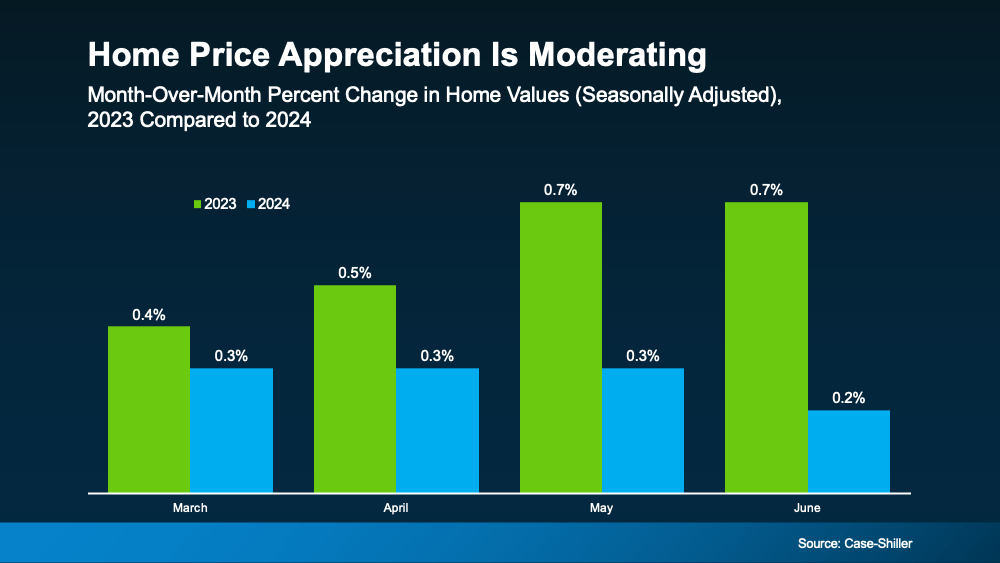
Throughout the country, home price appreciation is moderating. What that means is, prices are still going up, but they’re not rising as quickly as they were in recent years. The graph below uses data from Case-Shiller to make the shift from 2023 to 2024 clear:

No Caption ReceivedBut rest assured, this doesn’t mean home prices are falling. In fact, all the bars in this graph show price growth. So, while you might hear talk of prices cooling, what that really means is they’re not climbing as fast as they were when they skyrocketed just a few years ago.

What’s Next for Home Prices? It’s All About Supply and Demand

You might be curious where prices will go from here. The answer depends on supply and demand, and it’s going to vary by local market.

Nationally, the number of homes for sale is going up, but there still aren’t enough of them to meet today’s buyer demand. That’s keeping upward pressure on prices – even though recent inventory growth has caused that home price appreciation to slow. Danielle Hale, Chief Economist at Realtor.com, said:

“. . . today’s low but quickly improving for-sale inventory has ushered in more market balance than would otherwise be expected . . . This should help home prices maintain a slower pace of growth.” 

And here’s one other thing you may not have considered that could play a role in where prices go from here. Since experts say mortgage rates should continue to decline, it’s likely more buyers will re-enter the market in the months ahead. If demand picks back up, that could make prices climb a bit further.

Why You Should Work with a Local Real Estate Agent

While national trends give a big-picture view, real estate is always local – especially when it comes to prices. What’s happening in your neighborhood might be different from the national average based on what supply and demand look like in your market. That’s why it’s crucial to get local insights from a knowledgeable real estate agent.

As your go-to source for everything related to home prices, a local agent can provide the most current data and trends specific to your area.

So, if you’re planning to sell, they can help you price your house accurately. And when you’re ready to buy, they can find the right home that fits your budget and your needs.

Bottom Line

Home prices are still rising, just not as quickly as before. Whether you’re thinking about buying, selling, or just curious about what your house is worth, connect with a local real estate agent today to get the personalized guidance you need.

« Older Entries
 www.reneeandassociates.net

reneeandassociates1@gmail.com

  • Follow
  • Follow
  • Follow
  • Follow
  • Follow

 394 New Haven Ave. Suite #5,
Milford CT 06460

  203-283-5764

  203-395-0423

© Powered by ZipperAgent   |   Agent Login   |   Privacy Policy   |   DMCA

  • My Favorites (0)
  • My Saved Searches (0)
  • LOGIN

Get The Jump On
Real Estate Deals

Sign up today and receive email alerts of new listings
the moment they hit the market.

Please enter a valid first name
Please enter a valid last name
Please enter a valid email address
Please enter a valid phone number
Already have an account? Please Sign In

Get The Jump On
Real Estate Deals

Sign up today and receive email alerts of new listings
the moment they hit the market.

Please enter a valid email
Not a member? Register Here

This site uses cookies and related technologies for site operation, analytics, and for a better understanding of how visitors use the site. If you do not want the site to target ads, you can decline, and in that case only cookies required for the website to work properly will be used.