by Renee Penna | Aug 29, 2024 | For Buyers, For Sellers, Sellers

If you’ve been keeping an eye on the
housing market over the past couple of years, you know sellers have had the upper hand. But is that going to shift now that inventory is growing? Here’s a breakdown of what you need to know.
What Is a Balanced Market?
A balanced market is generally defined as a market with about a five-to-seven-month supply of homes available for sale. In this type of market, neither buyers nor sellers have a clear advantage. Prices tend to stabilize, and there’s a healthier number of homes to choose from. And after many years when sellers had all the leverage, a more balanced market would be a welcome sight for people looking to move. The question is – is that really where the market is headed?
After starting the year with a three-month supply of homes nationally, inventory has increased to four months. That may not sound like a lot, but it means the market is getting closer to balanced – even though it’s not quite there yet. It’s important to note this increase in inventory is not leading to an oversupply that would cause a crash. Even with the growth lately, there’s still nowhere near enough supply for that to happen.
The graph below uses data from the National Association of Realtors (NAR) to give you an idea of where inventory has been in the past, and where it’s at today:
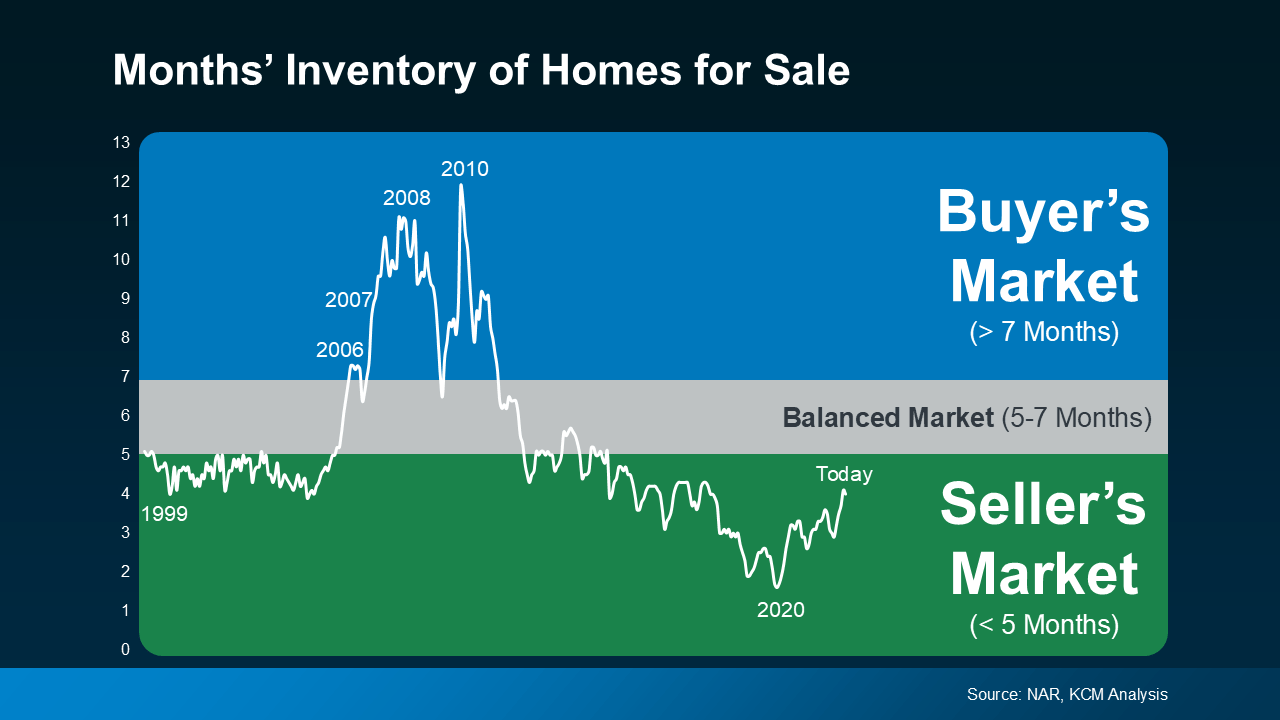 For now, this is still seller’s market territory – it’s just not as frenzied of a seller’s market as it’s been over the past few years. As Mark Fleming, Chief Economist at First American, says:
“The faster housing supply increases, the more affordability improves and the strength of a seller’s market wanes.”
What This Means for You and Your Move
Here’s how this shift impacts you and the market conditions you’ll face when you move. Lawrence Yun, Chief Economist at NAR, explains:
“Homes are sitting on the market a bit longer, and sellers are receiving fewer offers. More buyers are insisting on home inspections and appraisals, and inventory is definitively rising on a national basis.”
The graphs below use the latest data from NAR and Realtor.com to help show examples of these changes:
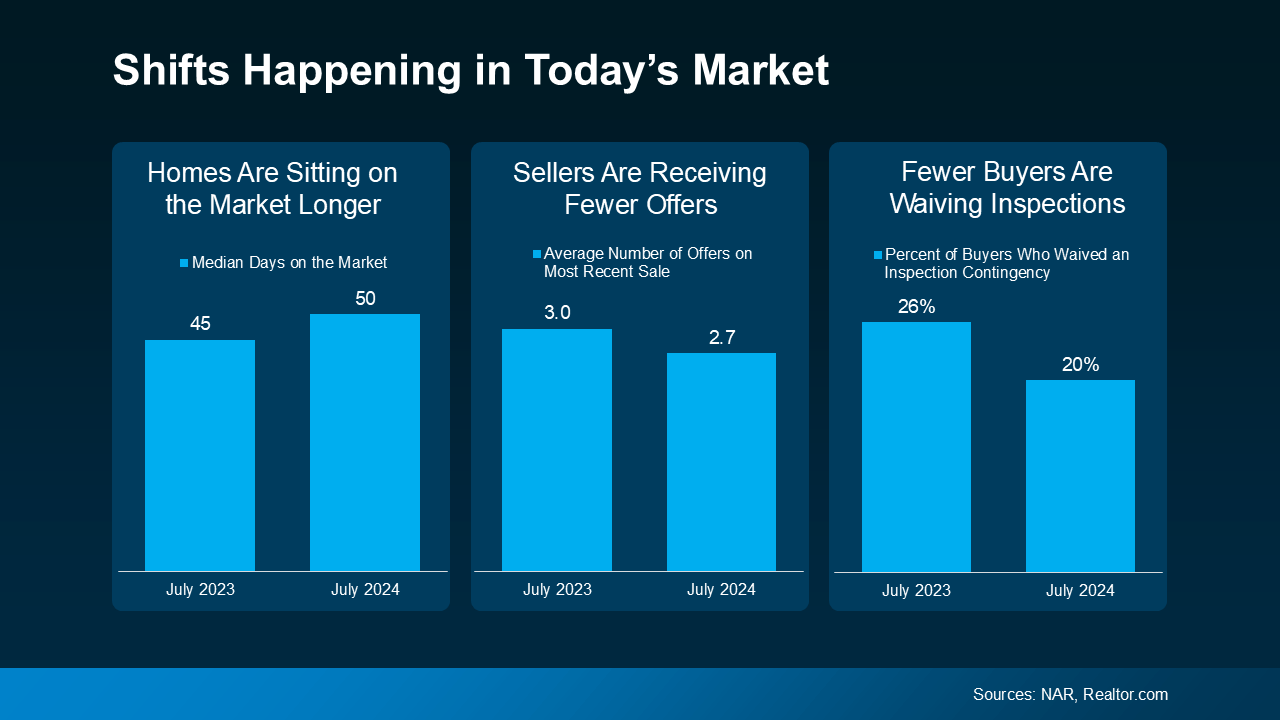 Homes Are Sitting on the Market Longer: Since more homes are on the market, they’re not selling quite as fast. For buyers, this means you may have more time to find the right home. For sellers, it’s important to price your house right if you want it to sell. If you don’t, buyers might choose better-priced options.
Sellers Are Receiving Fewer Offers: As a seller, you might need to be more flexible and willing to compromise on price or terms to close the deal. For buyers, you could start to face less intense competition since you have more options to choose from.
Fewer Buyers Are Waiving Inspections: As a buyer, you have more negotiation power now. And that’s why fewer buyers are waiving inspections. For sellers, this means you need to be ready to negotiate and address repair requests to keep the sale moving forward.
How a Real Estate Agent Can Help
But this is just the national picture. The type of market you’re in is going to vary a lot based on how much inventory is available. So, lean on a local real estate agent for insight into how your area stacks up.
Whether you’re buying or selling, understanding how the market is changing gives you a big advantage. Your agent has the latest data and local insights, so you know exactly what’s happening and how to navigate it.
Bottom Line
The real estate market is always changing, and it’s important to stay informed. Whether you’re buying or selling, understanding this shift toward a balanced market can help. If you have any questions or need expert advice, don’t hesitate to reach out to a local real estate agent.
by Renee Penna | Aug 21, 2024 | For Sellers, Sellers, Selling Tips

In today’s
housing market, many sellers are making a
critical mistake: overpricing their houses. This common error can lead to a home sitting on the market for a long time without any offers. And when that happens, the homeowner may have to drop their
asking price to try to re-ignite buyer interest.
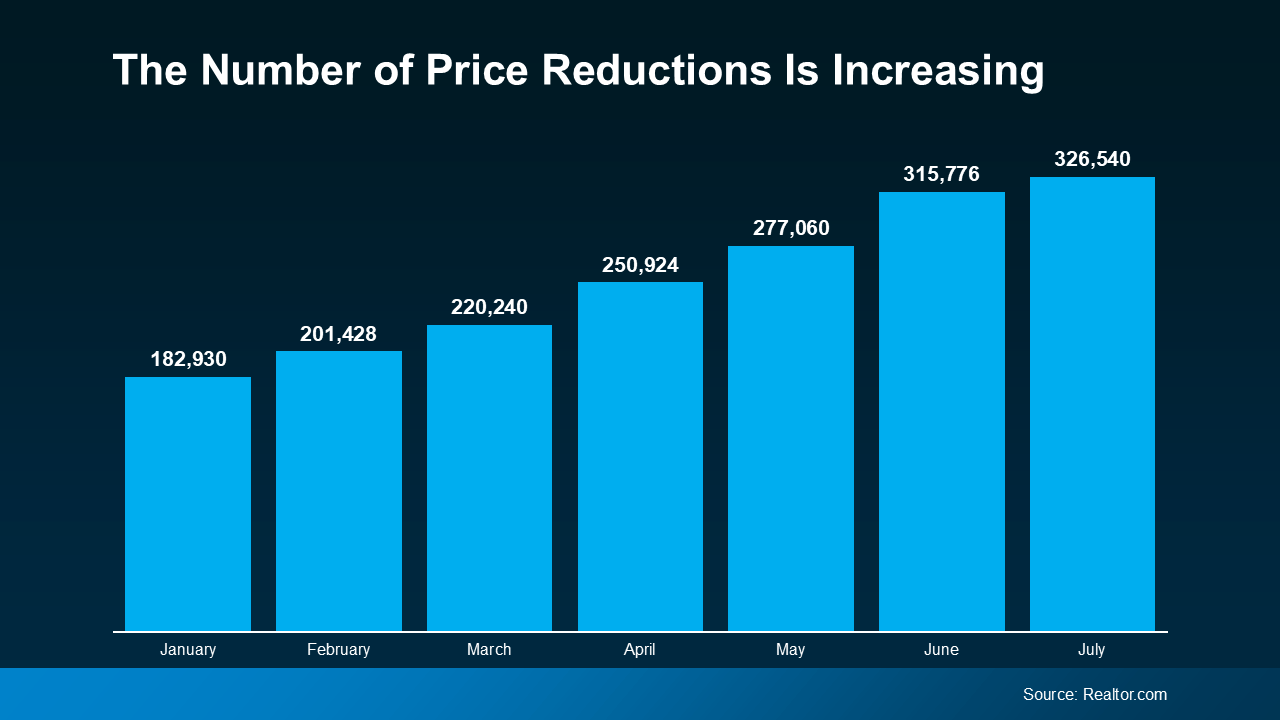
Data from Realtor.com shows the number of homeowners realizing this mistake and doing a price reduction is climbing (see graph below):
 If you’re thinking about making a move yourself, here’s what you need to know. The best way to avoid making a costly mistake is to work with a trusted real estate agent to find the right price. Here’s a look at what’s at stake if you don’t.
Not Paying Attention To Current Market Conditions
Understanding current market conditions is key to accurate pricing. You don’t want to set your asking price based on what happened during the pandemic. The market has moderated a lot since then, so it’s far better to align your price with today’s reality.
Real estate agents stay updated on market trends and how they impact the pricing strategy for your house.
Pricing It Based on What You Want To Make (Not What It’s Worth)
Another misstep is pricing it based on what you want to make on the sale, and not necessarily current market value. You may see other homes in your neighborhood selling for top dollar and assume yours can do the same. But you may not be considering differences in size, condition, and features. For example, maybe that other house is waterfront or has a finished basement. To sum it up, Bankrate explains:
“How do you find that sweet spot of pricing for profit but not overpricing? The expertise of your agent can be truly valuable here. A knowledgeable agent will understand fair market value in your area, how much your house is worth and how much you might reasonably expect to get for it in the current market.”
An agent will do a comparative market analysis (CMA) to make sure your house is compared with truly similar properties to get an accurate look at how it should be priced.
Pricing High to Leave Room for Negotiation
Another common, yet misguided strategy is to price your house high on purpose, so you have more room to negotiate down during the sale. But this can backfire. A price that seems too high often deters potential buyers from even considering the home. So rather than leaving room for negotiation, what you’ll actually be doing is turning buyers away. U.S. News Real Estate explains:
“You want to sell your house for top dollar, but be realistic about the value of the property and how buyers will see it. If you’ve overpriced your home, chances are you’ll eventually need to lower the number, but the peak period of activity that a new listing experiences is already gone.”
An agent can help you set a fair price that attracts buyers and encourages more competitive offers.
Bottom Line
Overpricing your home can have serious consequences. A knowledgeable real estate agent brings an objective perspective, in-depth market knowledge, and a strategic approach to pricing.
Connect with a local real estate professional to avoid making a pricing mistake that’ll cost you.
by Renee Penna | Jul 31, 2024 | Rent vs Buy, Sellers, Selling Tips

Figuring out what to do with your house when you’re ready
to move can be a big decision. Should you sell it and use the money for your next adventure, or keep it as a rental to build long-term wealth?
It’s a question many homeowners face, and the answer isn’t always straightforward. Whether you’re curious about the potential income from renting or worried about the responsibilities of being a landlord, there’s a lot to consider.
Let’s walk through some key questions to ask to help you make the best decision for your situation.
Is Your House a Good Fit for Renting?
Even if you’re interested in becoming a landlord, your current house might not be ideal for renting. Maybe you’re moving far away, so keeping up with the ongoing maintenance would be a hassle, the neighborhood isn’t great for rentals, or the house needs significant repairs before you could rent it out.
If any of this sounds like it might apply, selling might be your best option.
Are You Ready for the Realities of Being a Landlord?
Managing a rental property isn’t just about collecting rent checks. It’s a time-consuming and sometimes challenging job.
For example, you may get calls from tenants at all hours of the day with maintenance requests. Or you may find a tenant causes damage you have to repair before the next lease starts. You may even have to deal with people falling behind on payments or breaking their lease early. Investopedia highlights:
“It isn’t difficult to find horror stories of landlords troubled with more headaches than profits. Before deciding to rent, consider talking to other landlords and doing a detailed cost analysis. You might find that selling your home is a better financial decision and less stressful.”
Do You Have a Good Understanding of What It’ll Cost?
If you’re thinking about renting out your home primarily to generate extra income, remember that there are additional costs you’ll want to plan for. As an article from Bankrate explains:
- Mortgage and Property Taxes: You still need to pay these expenses, even if the rent doesn’t cover all of it.
- Insurance: Landlord insurance costs about 25% more than regular home insurance, and it’s necessary to cover damages and injuries.
- Maintenance and Repairs: Plan to spend at least 1% of the home’s value annually, more if the home is older.
- Finding a Tenant: This involves advertising costs and potentially paying for background checks.
- Vacancies: If the property sits empty between tenants, you’ll lose rental income.
- Management and HOA Fees: A property manager can ease the burden, but typically charges about 10% of the rent. HOA fees are an additional cost too, if applicable.
Bottom Line
To sum it all up, selling or renting out your home is a personal decision that depends on your circumstances. Whatever you decide, taking the time to evaluate your options will help you make the best choice for your future.
Make sure to weigh the pros and cons carefully and consult with professionals so you feel supported and informed as you make your decision. A real estate agent can be a great person to go to for advice.
by Renee Penna | Jul 25, 2024 | Economy, For Buyers, For Sellers, Sellers
As someone who’s thinking about buying or selling a home, you’re probably paying close attention to mortgage rates – and wondering what’s ahead.
One thing that can affect mortgage rates is the Federal Funds Rate, which influences how much it costs banks to borrow money from each other. While the Federal Reserve (the Fed) doesn’t directly control mortgage rates, they do control the Federal Funds Rate.
The relationship between the two is why people have been watching closely to see when the Fed might lower the Federal Funds Rate. Whenever they do, that’ll put downward pressure on mortgage rates. The Fed meets next week, and three of the most important metrics they’ll look at as they make their decision are:
- The Rate of Inflation
- How Many Jobs the Economy Is Adding
- The Unemployment Rate
Here’s the latest data on all three.
1. The Rate of Inflation
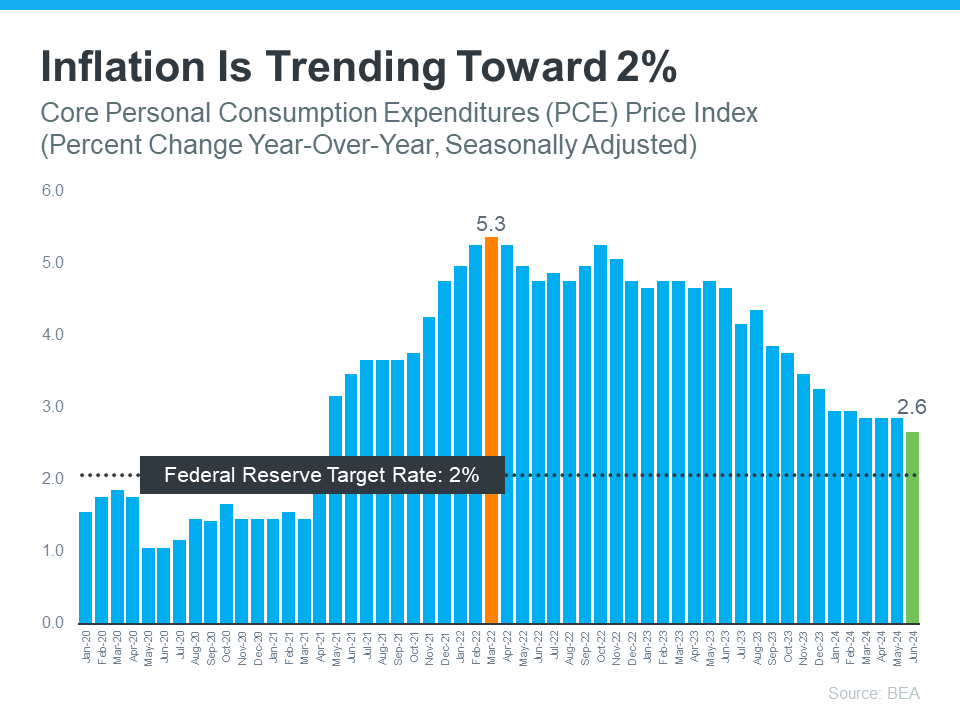
You’ve probably heard a lot about inflation over the past year or two – and you’ve likely felt it whenever you’ve gone to buy just about anything. That’s because high inflation means prices have been going up quickly.
The Fed has stated its goal is to get the rate of inflation back down to 2%. Right now, it’s still higher than that, but moving in the right direction (see graph below):
 2. How Many Jobs the Economy Is Adding
The Fed is also watching how many new jobs are created each month. They want to see job growth slow down consistently before taking any action on the Federal Funds Rate. If fewer jobs are created, it means the economy is still strong but cooling a bit – which is their goal. That appears to be exactly what’s happening now. Inman says:
“. . . the Bureau of Labor Statistics reported that employers added fewer jobs in April and May than previously thought and that hiring by private companies was sluggish in June.”
So, while employers are still adding jobs, they’re not adding as many as before. That’s an indicator the economy is slowing down after being overheated for quite some time. This is an encouraging trend for the Fed to see.
3. The Unemployment Rate
The unemployment rate is the percentage of people who want to work but can’t find jobs. So, a low rate means a lot of Americans are employed. That’s a good thing for many people.
But it can also lead to higher inflation because more people working means more spending – which drives up prices. Right now, the unemployment rate is low, but it’s been rising slowly over the past few months (see graph below):
 It may seem harsh, but a consistently rising unemployment rate is something the Fed needs to see before deciding to cut the Federal Funds Rate. That’s because a higher unemployment rate would mean reduced spending, and that would help get inflation back under control.
What Does This Mean Moving Forward?
While mortgage rates are going to continue to be volatile in the days and months ahead, these are signs the economy is headed in the direction the Fed wants to see. But even with that, it’s unlikely they’ll cut the Federal Funds Rate when they meet next week. Jerome Powell, Chair of the Federal Reserve, recently said:
“We want to be more confident that inflation is moving sustainably down toward 2% before we start the process of reducing or loosening policy.”
Basically, we’re seeing the first signs now, but they need more data and more time to feel confident that this is a consistent trend. Assuming that direction continues, according to the CME FedWatch Tool, experts say there’s a projected 96.1% chance the Fed will lower the Federal Funds Rate at their September meeting.
Remember, the Fed doesn’t directly set mortgage rates. It’s just that whenever they decide to cut the Federal Funds Rate, mortgage rates should respond.
Of course, the timing of when the Fed takes action could change because of new economic reports, world events, and other factors. That’s why it’s usually not a good idea to try to time the market.
Bottom Line
Recent economic data may signal that hope is on the horizon for mortgage rates. Count on a local real estate agent you can trust to keep you up to date on the latest trends and what they mean for you.
by Renee Penna | Jul 11, 2024 | Downsize, Sellers, Selling Tips

Retirement is a time for relaxation, adventure, and enjoying the things you love. As you imagine this exciting new chapter in your life, it’s important to think about whether your
current home still fits your needs.
If it’s too big, too costly, or just not convenient anymore, downsizing might help you make the most of your retirement years. To find out if a smaller, more manageable home might be the perfect fit for your new lifestyle, ask yourself these questions:
- Do the original reasons I bought my current house still stand, or have my needs changed since then?
- Do I really need and want the space I have right now, or could somewhere smaller be a better fit?
- What are my housing expenses right now, and how much do I want to try to save by downsizing?
If you answered yes to any of these, consider the benefits that come with downsizing.
The Benefits of Moving into a Smaller Home
There are many reasons why you should downsize. Here are just a few from Bankrate: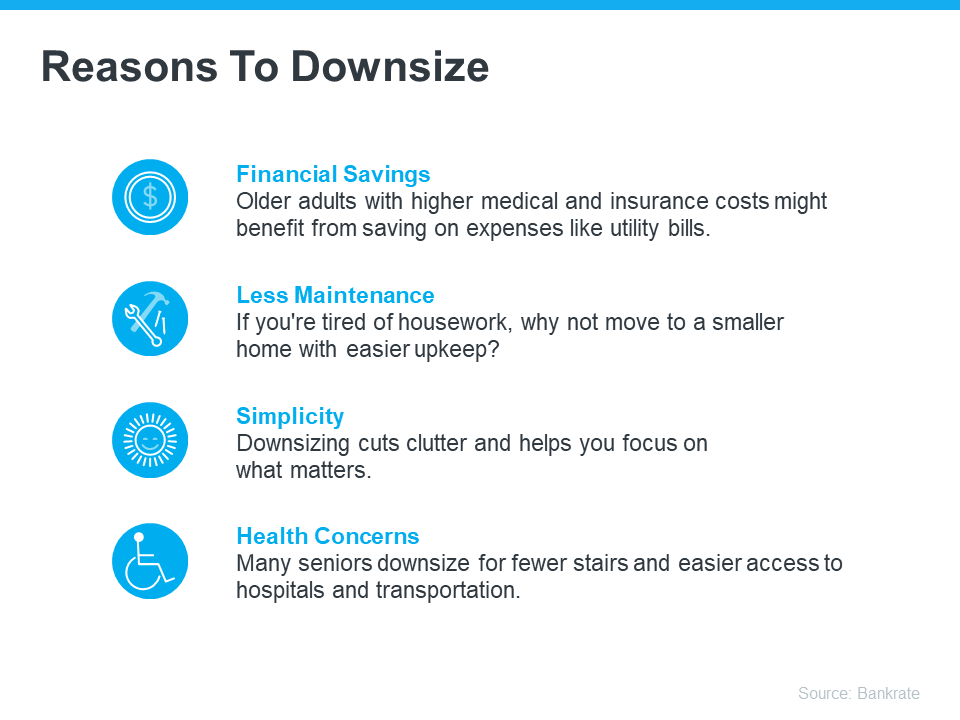
Your Equity Can Help Make Downsizing Possible
If those perks sound like something you’d want, you may already have what you need to make it happen. A recent article from Seniors Guide shares:
“And at a time when homeowners age 62 and older have more than $12 trillion in home equity, downsizing makes sense . . .”
If you’ve been in your house for a while, odds are you’re one of those homeowners who’s built up a considerable amount of equity. And that equity is something you can use to help you buy a home that better fits your needs today. Greg McBride, Chief Financial Analyst at Bankrate, explains:
“Downsizing can mean taking that equity when the home is sold and using it to pay cash or make a large down payment on a lower-priced home, reducing your monthly living expenses.”
When you’re ready to use all that equity to fuel your next move, your real estate agent will be your guide through every step of the process. That includes setting the right price for your current house when you sell, finding the home that best fits your evolving needs, and understanding what you can afford at today’s mortgage rate.
Bottom Line
Starting your retirement journey? Think about downsizing – it could really help. When you’re ready, talk to a local real estate agent about your housing goals this year.
by Renee Penna | May 29, 2024 | Sellers, Selling Tips

You’re ready to
sell your house. But what do you need most from your real estate agent? Well, the
National Association of Realtors (NAR) asked that very question to recent sellers and found one of the top things they were looking for is help marketing their house to potential buyers. Maybe that’s what you need the most help with too.
You expect your real estate agent to write a great description of your house for the listing and pair it with some high-quality photos. But that’s not all you’re going to get when you partner with a great agent.
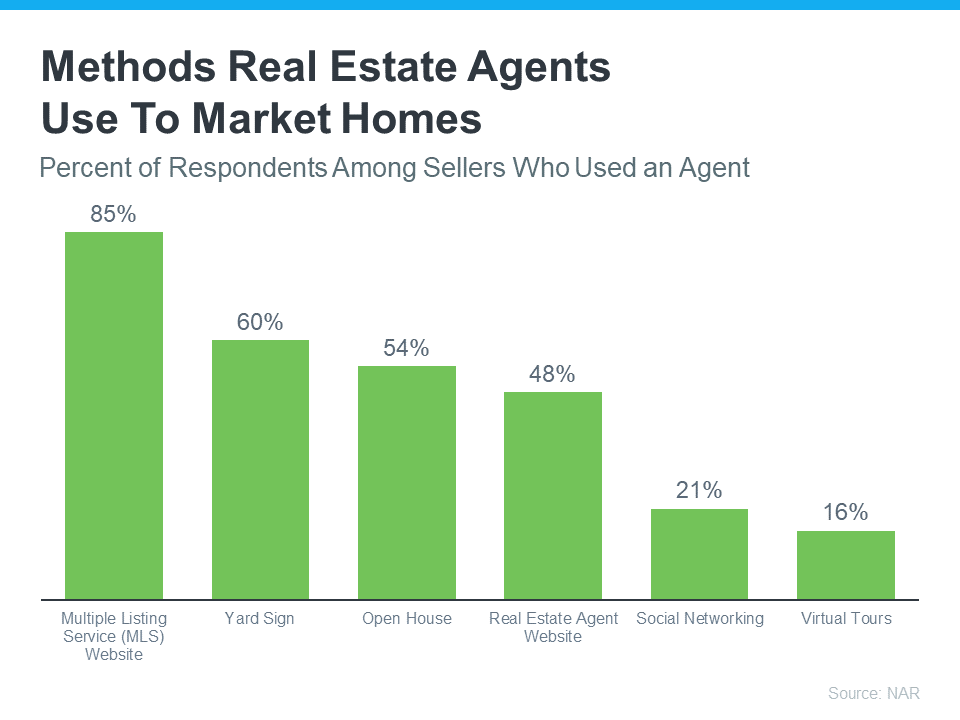
They’ll do a lot more to make sure your house stands out. Here are some of the most common methods real estate agents use to market homes according to that same report from NAR (see graph below):
So, how can you benefit from your agent using these methods?
- Listing on the MLS – By listing your house on the MLS, it will get more visibility from other real estate agents and buyers. This could lead to more traffic, which could ultimately help you see an increase in offers and ultimately a better price.
- Using a Yard Sign – A yard sign catches the eye of people driving or walking by. This method drums up local interest since people who live nearby might have friends or family looking to move into the area. It also prominently displays your agent’s contact information, so interested buyers can get in touch easily.
- Having an Open House – When your agent advertises and hosts your open house, buyers see others are interested in your house, too. This competition can lead to stronger offers. An open house is also easier for you since you only need to leave once for many buyers to visit. Plus, your agent may get useful feedback on what people like or don’t like, which can help you make improvements to attract more buyers later, if needed.
- Showcasing on Your Agent’s Website – Having your house visible on your agent’s website allows for a professional presentation of your property. Additionally, people visiting your agent’s website are more likely to be serious buyers who are ready to make a move.
- Social Networking – Your real estate agent works hard to have a wide-ranging social media presence. Marketing your house this way allows them to reach a large audience. It also makes it easy for people to share your listing with friends and loved ones who might be interested.
- Providing Virtual Tours – Virtual tours are extremely convenient for buyers, especially those who are relocating from out of town. This method allows them to tour anytime, day or night. It shows your agent is using the latest technology to market your house.
There are many tools that can be used to market your house. As NerdWallet sums up:
“A good real estate agent will have a robust plan to promote your listing in an effort to find the right pool of buyers. Adding your home to databases of available homes called multiple listing services (MLS), open houses, 3D virtual tours, professional photography and broker tours for buyers’ agents (particularly for luxury homes) are all factors that may go into a marketing plan.”
As a seller, it’s smart to work with a creative local real estate agent who can maximize them to make sure you get as many eyes on your house as possible.
Bottom Line
When it comes to marketing your house, working with a pro has tons of benefits. If you’re ready to sell, but don’t know where to start, connect with a local real estate agent.
